


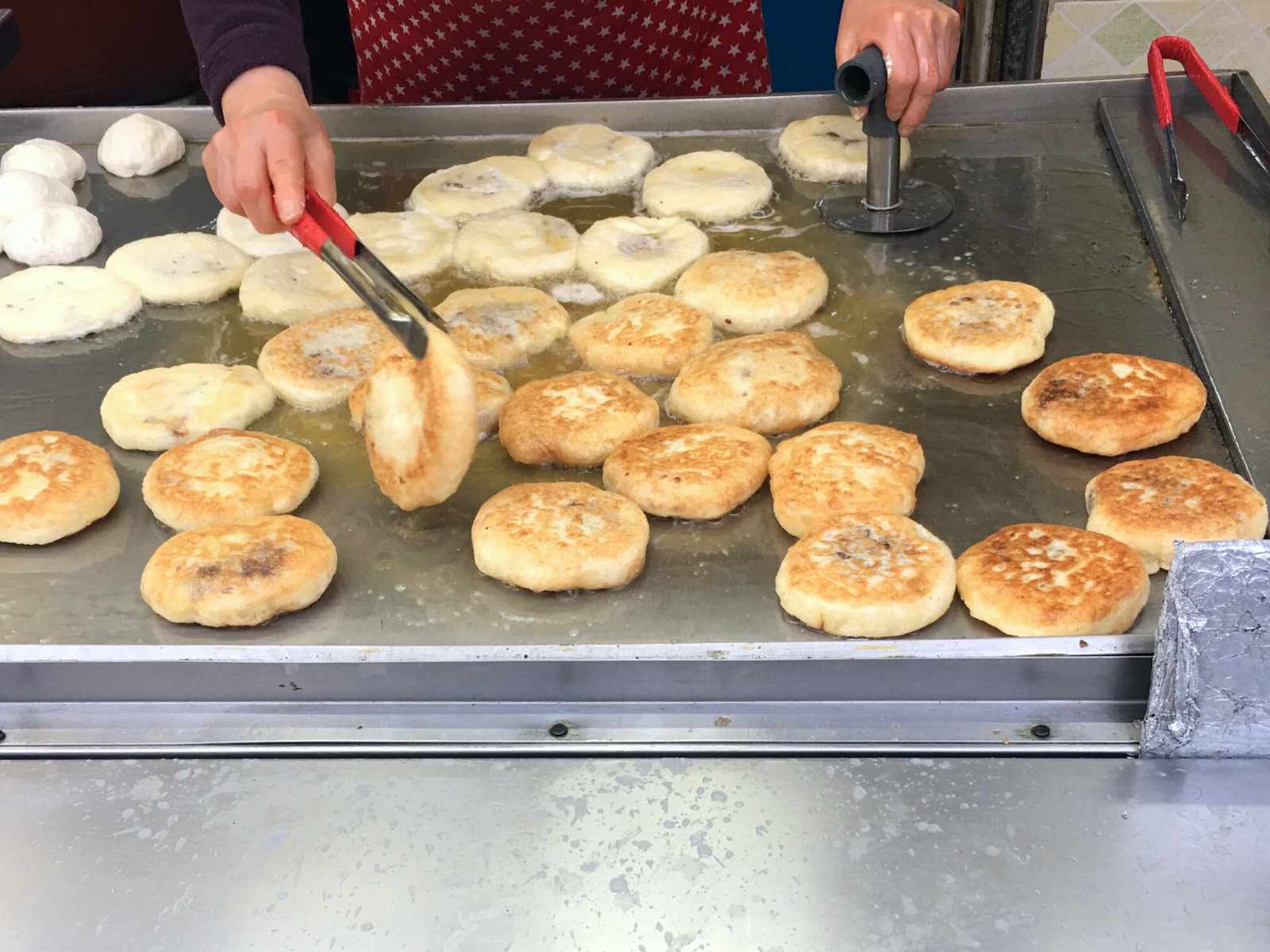
Hotteok (호떡) is a yeasted Korean street pancake stuffed with brown sugar, cinnamon and crushed walnuts, then fried until the filling melts into a caramel syrup. They're sold piping hot from Myeongdong street carts from October through February.

Table of contents
One of Korea’s most popular street foods, hotteok is sweet, crispy, chewy and crunchy. This recipe is made exactly how street food vendors make them in Seoul, and it has the same flavor and distinct texture.
Sweet Korean pancakes are incredibly popular nowadays and are a big part of pop culture. Korean boyband phenomenon BTS pretty much broke the internet when they shared hotteok as one of their favourite street foods.
If Korean street food is your guilty pleasure, check out the insanely popular Korean Corn Dogs, sweet and savory Korean Cream Cheese Garlic Bread or quick and easy Gilgeori Toast. Indulge in Korean desserts with this cute Korean Lunchbox Cake or the Korean Café-style Homemade Strawberry Milk.

Hanelore's Note
During my time in Seoul, I became obsessed with the hotteok from the corner stalls in Myeongdong. I made friends with a halmeoni (grandma), who shared her recipe with me.
Her secret tip is mixing some breadcrumbs into the filling mixture, which keeps the syrup from crystallizing. She was kind enough to allow me to share this recipe here, so everyone can enjoy hotteok even outside of Korea.
What does hotteok mean?
In Korean, hotteok is pronounced as "hoh-ttokh", with a harsh T and silent throaty K. Since in Hangul the letters T and D are very similar in pronunciation, hotteok is sometimes also spelled as hodduk (or hoddeok); same dish, different romanization.
Hotteok literally translates to "barbarian rice cake". 호 (Chinese character 胡) was the old Korean term for Chinese, a nod to the merchants who brought the original recipe from Shandong in the late 1800s. 떡 means "rice cake", so 호떡 = barbarian rice cake.
Regional hotteok styles across Korea
Three hotteok regional styles exist in Korea:
- Myeongdong-style (Seoul) uses a 50/50 wheat and glutinous rice flour blend, fried longer for a deep golden, chewy crust.
- Busan ssiat-hotteok (씨앗호떡) uses sunflower seeds, walnuts, and sesame seeds pressed on top of the dough, creating a nuttier exterior.
- Insadong flat-style is pressed thinner for extra crispiness, often served with honey.
This recipe is Seoul’s Myeongdong-style. For Busan-style, fold seeds into the dough and press more onto the exterior before frying. For Insadong-style, press thinner and fry until extra crispy.
What ingredients you need

For the pancake dough
- Milk – helps make the dough sweet and fluffy. Can be substituted with water or plant based milk. Use warm milk to help the yeast activate.
- Yeast – I use instant yeast because it's fast. You can also use fresh yeast (the dry to fresh yeast ratio is 1:3, so for 7 grams of instant dry yeast you will need 21 grams of fresh yeast).
- Oil – use a flavorless vegetable oil, like sunflower or canola. Other oils will change the flavor of the pancake.
- Flour – regular all-purpose flour works best. Do not use self-rising flour because it contains baking powder.
- Glutinous rice flour – also known as sweet rice flour, it’s what makes the pancake dough chewy. I use Korean chapssal-garu (찹쌀가루) or Japanese mochiko (both are glutinous rice flours that produce excellent results). Avoid Thai glutinous rice flour, which has a slightly different grind and can produce a gummier texture.
Choosing the right sweet rice flour
I tested three widely available options:
- Koda Farms mochiko (fine grind, widely available in US) produces a tender, delicate chew.
- Korean 찹쌀가루 from brands like CJ or Ottogi (sold at H Mart) offers a balanced chew that's closest to street-vendor results.
- Erawan-brand glutinous rice flour (coarser grind, sold in Asian grocers) gives more structure and a firmer bite.
I prefer Korean chapssal-garu for authenticity, but mochiko is an excellent substitute if you can't find it. The grind difference is visible: mochiko is powder-fine, while Erawan has a slightly grainy texture.
For the filling
- Sugar – I use a combination of light brown sugar and dark brown sugar for an intense caramel flavor. You can use entirely light brown sugar. I don’t recommend using plain white sugar, because the melted filling won’t be as gooey.
- Cinnamon – only a little cinnamon powder is needed, but it gives a lovely earthy kick. You can also use nutmeg or ginger.
- Nuts – Most hotteok are filled with walnuts, but peanuts or almonds also work. Chop the walnuts into smaller pieces so they still add crunch. Do not use a food processor (the nuts will be too fine).
- Seeds – Seeds can be added in addition to nuts or on their own. Usually a combination of pumpkin and sesame seeds are mixed with the sugar for a crunchy texture.
Equipment for pressing hotteok
Korean sweet pancakes need to be pressed down when cooked, which flattens them into a disc shape. This is usually done with a special hotteok hand press, which looks similar to a burger press.
A stainless steel potato masher works just as well. Or just use a stainless steel spatula.
How to make hotteok step by step
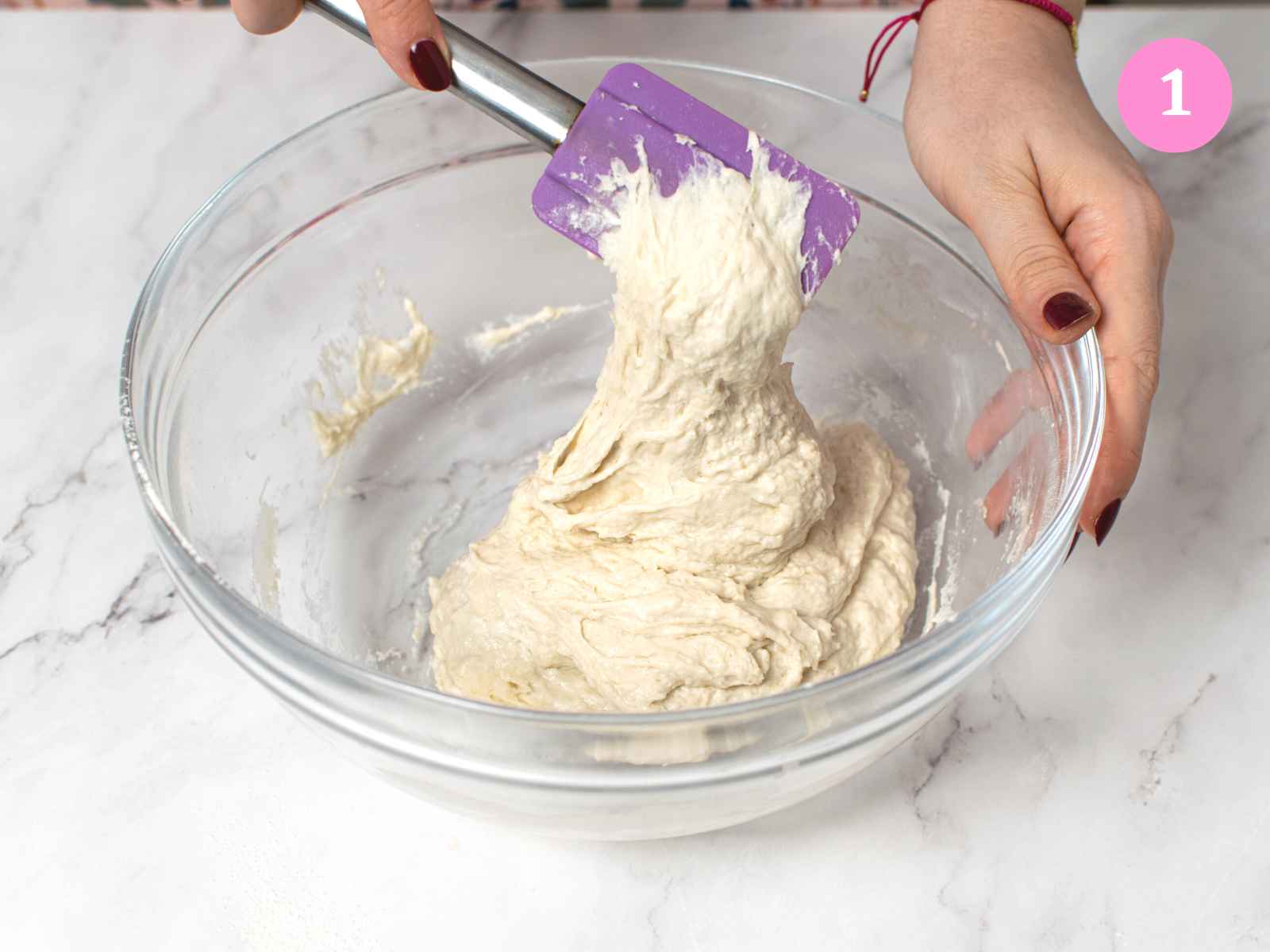
- In a large bowl, combine all the ingredients for the pancake dough. Use a spatula to mix them into a sticky dough, without kneading it. Cover and let the dough prove.

- Mix all the ingredients for the filling in a small bowl, then set aside to let the dough rise.

- Once the dough has doubled in volume, make small golf-ball size pieces of dough.

- Flatten the dough ball in your palm into the shape of a disc.

- Add a generous scoop of sugar filling in the middle, about 1-2 tablespoons.

- Use your fingers to wrap the dough around the filling, completely encasing it inside.

- Add the hotteok to a hot frying pan, then with your tool press down and slightly rotate. Cook over medium heat until lightly golden on one side. Flip over the pancake, then press down to flatten it and fry until golden brown.
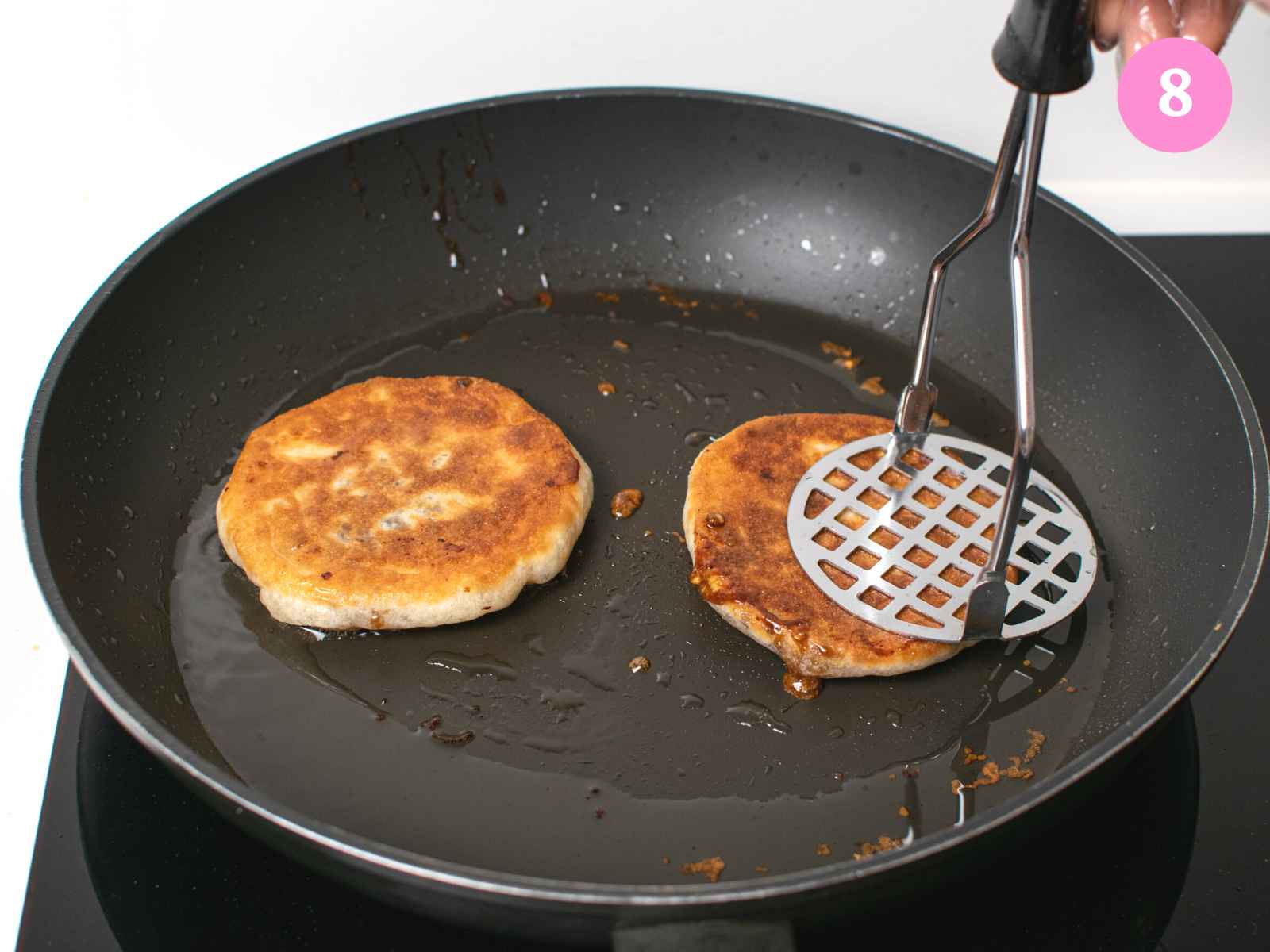
- Flip once more and fry until golden brown, pressing down again to flatten the other side too. It should take about 2-3 minutes in total per side.
Proofing options: quick vs. overnight
I tested proofing the same dough two ways: at room temperature and overnight in the fridge.
- Room temperature for 2-3 hour at 24°C (75°F): much faster and gives excellent results.
- Overnight cold proof at 4°C for 12–16 hours: Lots of home cooks in Korea prefer this method. The cold-proofed dough develops more complex, slightly tangy dough flavor from the slower fermentation. The longer hydration time also creates a nicer chew. I prefer the overnight method if I have time, but quick proof wins when you’re short on time.
Hotteok filling variations
Sweet fillings
- Red beans (팥 호떡) – sweet red bean paste is added in the center of the dough. This type of pancake is very filling and has a dense, sticky center.
- Green tea (녹차호떡) – matcha powder is used for the pancake dough and the filling. This type has a fresh, herbal flavor.
- Cheese (치즈 호떡) – cheese is added in addition to the sugar filling, making the pancake sweet and savory with a lovely melted cheese interior. Use mozzarella for a gooey center.
- Honey (꿀 호떡) – honey is added to the filling for a floral aroma.
- Chocolate (초콜릿 호떡) – cocoa powder is added to the sugar filling for a rich chocolatey flavor.
- Mugwort (쑥 호떡) – dried mugwort or mugwort powder is added to the dough for a herby, grassy flavor.
Savory fillings
- Vegetable (야채호떡) – filled with stir fried vegetables like scallions, onion, chives, carrots, mushrooms.
- Kimchi (김치호떡) – filled with stir fried kimchi for a savory and spicy flavor.
- Pizza (피자호떡) – filled with cheese, tomato sauce and pepperoni or vegetables.
- Japchae (잡채호떡) – filled with Korean glass noodles, vegetables and sweet sesame sauce.
- Meat (고기호떡) – minced meat mixed with scallions and vegetables. This type is closest in flavor to the Chinese pancake called xian bing.

How to get crispy hotteok with gooey filling
- No kneading – the dough needs to be sticky and fluffy, so don't knead it. Kneading develops gluten strands, which creates a bready texture. Hotteok dough should stay loose and sticky, so overmixing the dough will toughen the pancake. Mix just until the ingredients come together, then stop.
- The breadcrumb trick: Korean street vendors often mix 1–2 teaspoons of fine breadcrumbs (panko or plain) into the filling. The breadcrumbs absorb moisture during frying and prevent the sugar from crystallizing into a gritty texture. I tested two batches side-by-side: without breadcrumbs, the filling became slightly grainy after 10–15 minutes. With breadcrumbs, it stayed smooth and syrupy.
- ‘Press-and-rotate' method: When cooking hotteok, press down firmly, then give a quarter turn while pressing to spread the dough evenly. This prevents thin spots that can tear and leak filling during frying. The rotation creates a more uniform thickness across the pancake.
- Add enough filling: Use a heaping tablespoon filling per pancake. If you use less, the sugar absorbs into the dough during frying and you lose the signature gooey syrup center entirely. More filling means more syrup (don't be shy).
How to serve and store
Serving hotteok the street food way
Korean street vendors serve hotteok in a small paper cup or folded paper holder to catch drips and keep hands clean. They often cut a small vent slit in the top of the pancake to release steam before the first bite, preventing burns from the molten filling. If you're serving these at home, small paper cups or parchment paper squares work perfectly.
Storage and reheating best practices
Hotteok is best eaten fresh. Letting it sit for too long makes it turn too soft, losing the lovely crunch.
For short-term storage, keep in an airtight container at room temperature for 1–2 days. Always reheat in a skillet over medium heat. Never microwave, which makes the crust soggy and chewy.
For longer storage, freeze raw dough balls (not cooked hotteok) for up to 2 months. Thaw in the fridge overnight before frying. I don't recommend freezing cooked hotteok, because the texture degrades significantly, with the crust becoming tough and the filling crystallizing.
Common questions
The most common cause is thin spots in the dough from uneven pressing. Make sure you seal the dough completely around the filling before placing in the pan, and use the press-and-rotate method to flatten evenly. Also check that your oil isn't too hot (above 180°C, the crust can crack before it sets).
Hotteok dough is meant to be sticky. Oil your hands generously before shaping. Keep a small bowl of vegetable oil nearby and re-oil your hands between each pancake. Don't add more flour to the dough, as this will make the final texture too dense and bready.
This usually means the oil temperature was too low (below 160°C) or you didn't use enough filling. The sugar needs to reach caramelization temperature (around 160°C) to transform into syrup. Use at least 15g of filling per pancake and ensure your oil is in the 165–170°C range.
Yes! The dough can be made up to 24 hours in advance and cold-proofed in the refrigerator. This actually develops deeper flavor. Let the dough come to room temperature for 30 minutes before shaping, or shape while cold and let the balls rest for 15 minutes before frying.
You likely kneaded the dough too much or used too little glutinous rice flour. Mix just until the ingredients come together (30–45 seconds maximum), and make sure you're using the correct ratio of glutinous rice flour to all-purpose flour. The glutinous rice flour is what creates the signature chewy texture.

If you enjoyed this recipe, you will love these too:


Craving more delicious pancakes? Check out these fluffy and easy Pancakes with Self Rising Flour!
If you’ve tried this recipe out, please don’t forget to rate and comment on this post. I love hearing from you, so feel free to reach out to me on social media as well and tag me in your posts!
Recipe

Hotteok: Korean Sweet Pancake Recipe (호떡)
Equipment
- 1 hotteok presser, spatula or potato press*
- 1 large deep frying pan
Ingredients
For the pancake dough
- ¾ cup water, lukewarm (200 grams)
- ¼ cup milk, lukewarm * (50 grams)
- 1 packet instant dry yeast (7 grams)
- ⅛ cup granulated sugar (25 grams)
- ⅛ cup vegetable oil * (30 grams)
- 2 cups all-purpose flour (240 grams)
- ⅓ cup glutinous rice flour (60 grams)
- ¼ teaspoon fine salt
For the brown sugar filling
- ¼ cup dark brown sugar * (50 grams)
- ¼ cup light brown sugar (50 grams)
- 1 teaspoon cinnamon powder
- ¼ cup chopped walnuts (30 grams)
- ¼ cup sesame seeds, optional (30 grams)
Extra
- vegetable oil, for frying *
Instructions
Preparing the pancake dough
- In a large mixing bowl add lukewarm water, sugar and yeast. Mix well to dissolve, then set aside for 5 minutes.
- Pour in the vegetable oil, then sift in the all purpose flour, sweet rice flour and salt. Combine everything loosely with a spatula or wooden spoon. Only mix until the dough is combined, do not knead. Cover with plastic wrap, then let sit in a warm place for 30-45 minutes.
- Fold over the dough with a spatula for a few minutes to deflate the air. The dough will be fairly sticky, but do not add extra flour. Cover once again and let proof for another 30-45 minutes.
- Prepare the filling by combining dark brown sugar, light brown sugar, cinnamon and chopped walnuts. Mix well and set aside.
- Add a little vegetable oil on your hands to prevent the dough from sticking. Divide the dough into 12 equal pieces.
- Take one dough piece and flatten it into a disc. Add a heaping teaspoon of the sugar filling mixture in the middle.
- Wrap all sides of the dough around the filling, enclosing it inside. The dough should easily stick to itself, but pinch it if necessary to enclose the filling. Repeat the process for the remaining dough pieces.
- Heat up a large pan with vegetable oil over medium heat. Once the oil is sizzling, add two hotteok at a time onto the pan. Cook for 1-2 minutes without pressing.
- Flip the pancakes over and press down with a spatula or hotteok press to flatten into a disc.
- Cook for 1-2 minutes or until the the hotteok is golden-brown in colour. Flip the pancake once more, pressing it down again to flatten and cook until golden-brown. This should take another 1-2 minutes.
- Let cool down for a few minutes before enjoying whilst still hot.
Notes
- I recommend using a kitchen scale in grams for more accuracy. The cups used for the conversion are standard US customary cups (1 cup flour = 136g). There are many different types of cups across the globe, which is why I strongly recommend using grams instead.
- Nutritional value is estimative and it's calculated per serving (this recipe makes 12 small hotteok pancakes).
- Use an odourless, flavourless vegetable oil like sunflower or canola (rapeseed).
Nutrition

About The Author
Hanelore is the creator of SugarYums and winner of Netflix show Crazy Delicious. She shares delicious Korean street food, East Asian desserts, and playful fusion recipes that bring global flavours to everyday kitchens. Inspired by the food markets of Seoul and beyond, Hanelore combines tradition with creativity to make cooking feel bold, cozy, and fun!
Sibelle says
I can't tell you how much I appreciate this post! Not only did I learn to make hottek but also learnt so much about it! Thanks for all the language explanations too, it's really interesting!
Adaja Blom says
I love hotteok, when I make it for myself it is too much , Iwonder if you freeze it fully baked or unbaked ?
Hanelore Dumitrache says
Hi Adaja, I recommend cooking them first, then cool down fully before freezing. To store, wrap individual hotteoks in plastic wrap and place in an airtight container, then freeze for up to 2-3 months. Thaw them by leaving them in the fridge overnight and reheat in the pan or airfryer until hot. Hope this helps!